

In this article:
A historic Crufts win, and an overdue conversation
For the first time since 1991, a Clumber Spaniel has been crowned Best in Show at Crufts. Bruin, officially registered as Sh Ch Vanitonia Soloist and handled by Lee Cox, beat nearly 18,600 dogs at Birmingham’s NEC to take the most prestigious title in the dog show world. His lap of honour was a genuinely joyful moment, and Lee Cox was barely able to string a sentence together in the aftermath. Hard not to smile at that.
But with the spotlight comes an uncomfortable conversation, one that honestly needed to be had. Because while Bruin’s win is a wonderful thing for Clumber Spaniel visibility, it also shines a light on a problem that has been quietly growing for decades: the widening gap between the show Clumber Spaniel and the dog it was actually bred to be.
What the Clumber Spaniel was always meant to be
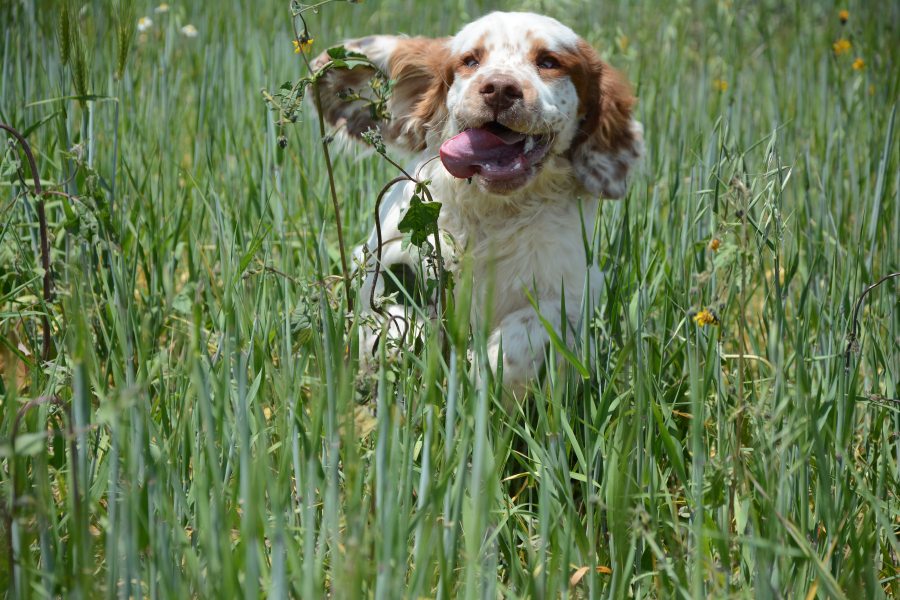
Originally developed as a flushing and retrieving spaniel renowned for stealth and silence in the field, the Clumber Spaniel’s sturdy, low body was purpose-built for dense terrain, earning it the nickname the “retired gentleman’s shooting dog.” Solidly built, with stamina, a keen nose, drive, and steadiness, this was a working dog in every sense of the word. The Kennel Club’s own breed standard still describes the ideal Clumber Spaniel as “firm, fit, and capable of a day’s work of beating in heavy cover.” That’s the benchmark. Worth remembering.
It’s also worth knowing that the working Clumber Spaniel is very much alive, and thriving. The Working Clumber Spaniel Society (WCSS), founded in 1984, exists specifically to maintain the Clumber Spaniel as a natural working gundog, and has been doing exactly that for over 40 years. With HRH The Princess Royal serving as President, the WCSS runs field trials, training events, and working displays. Their mission is straightforward: promote working use, encourage selective breeding from sound, work-proven dogs, and restore and maintain the breed’s physical soundness and functional qualities. If you want to see what a Clumber Spaniel looks like when form follows function, their website is a very good place to start.
The health picture (what the data actually tells us)
The WCSS recently published a comprehensive Health Report, compiled from a survey of 277 dogs, 51 registered litters, and a DNA project in partnership with Embark, and it makes for fascinating, if at times sobering, reading.
The good news first
Not all of it is cause for alarm. The Clumber Spaniel’s cancer rate in the survey came in at just 4.3%, well below the expected figure of around 27% for pedigree dogs in the UK. Heart problems affected only 4% of dogs surveyed. And the five-year median hip score has improved significantly, sitting at 10, indicating real progress from responsible breeders making better breeding decisions. These are genuinely encouraging signs.
Where the concerns lie
However, the report also reveals a breed carrying a significant health load. Some 31% of Clumber Spaniels in the survey had experienced an ear infection during their lifetime. Eye problems affected 31%, yet only 21% had ever had a BVA eye test, with entropion (eyelids rolling inward) recorded in 9.7% of the survey population. Skin conditions affected 29% of dogs, slightly above the UK canine average of 15 to 25%.
The spinal picture is nuanced but important. Every single Clumber Spaniel tested, 100%, carries the IVDD Type 1 gene associated with increased risk of slipped discs, a direct consequence of the breed’s long-backed body shape. Only 14% showed clinical signs, which is a testament to responsible weight management among working breeders, but it underlines how much the breed’s conformation already asks of its skeleton.
The inbreeding crisis hiding in plain sight
Perhaps the most alarming finding concerns the Clumber Spaniel’s genetic diversity. The WCSS Embark project revealed an average genetic coefficient of inbreeding (COI) of 39.8%, more than double the Kennel Club’s own figure of 18.3% for the same dogs. To put that in perspective, a father-to-daughter mating produces a COI of around 25%. The Kennel Club’s calculations, based on incomplete pedigree records, are significantly underestimating the true scale of inbreeding in both show and working lines.
Key takeaway: This is a breed-wide problem, and one that urgently needs addressing through strategic outcrossing and genetic testing before breeding.
A vulnerable breed that needs this attention
Clumber Spaniel registrations tell their own story. According to the WCSS Health Report, only 223 puppies were registered in 2023, down from a post-pandemic peak of 285, with the five-year rolling average sitting at just 220. This is a breed already classified as a vulnerable native breed by the Kennel Club. Without visibility, those numbers don’t improve. Without public interest, breed standards don’t get scrutinised or reformed.
Why Bruin’s win is a catalyst, not the problem
Here’s where I’ll push back against the loudest critics piling onto this Crufts result. A Best in Show for the Clumber Spaniel is not the enemy of progress, it may actually be its catalyst.
Before Sunday, how many people outside the spaniel world were seriously asking questions about Clumber Spaniel health, conformation, or the divergence between show and working lines? Almost none. Now thousands are. That’s the uncomfortable gift that a high-profile win delivers, a national platform for a conversation that the WCSS and others have been trying to start for years, largely to an empty room. A wave of newly curious people now have the chance to find the Working Clumber Spaniel Society, read the health data, and ask better questions of breeders.
Change follows scrutiny, and the evidence proves it
The history of canine welfare tells us clearly that meaningful reform tends to follow public pressure. The Kennel Club’s recent decision to reclassify the French Bulldog and Basset Hound to Category 3 of their Breed Watch system, requiring best-of-breed winners to pass veterinary health checks at championship shows including Crufts, came after years of mounting pressure from researchers, vets, and an increasingly informed public. The Royal Veterinary College’s research into English Bulldogs explicitly called on the public to demand dogs with more moderate, healthier conformations, arguing that the real power for change rests with public awareness. These reforms didn’t come from closed show circles. They came from noise.
The verdict: use the moment
So yes, show Clumber Spaniels and their working counterparts can look like entirely different animals. The health data confirms that the breed carries real burdens, some rooted in conformation, some in genetics, some in a gene pool that is far narrower than most people realise. These are genuine problems worth confronting head-on.
But dismissing Bruin’s win, or retreating into cynicism, helps no one, least of all the Clumber Spaniel. Follow the Working Clumber Spaniel Society. Read their Health Report. Ask breeders the difficult questions about hip scores, elbow grades, EIC status, and genetic COI before you commit to a puppy. Demand that “Best in Show” actually means something for the long-term health and working ability of the dog, not just how it moves around a ring on one Sunday evening in Birmingham.
Bruin didn’t create these problems. But his moment in the spotlight might just be what finally starts fixing them.
Ready to stop guessing and start leading?
Join the LWDG Membership
Take the Free Level Finder
Want more free training like this? Browse our free resources
Enjoyed this? There is a whole library where it came from.
Training advice, honest conversations and real breed knowledge, all free, all written for women like you.
